
Osteoarthritis is a progressive wear of the articular cartilage, affecting 10 million people in France and 6 million in Canada, where it is the leading cause of disability. Its origins are multiple: previous trauma, inflammation, excess weight, or ageing. Weight-bearing joints such as the knee or the hip are the most exposed. The disease progresses through several stages: the cartilage cracks, thins, and then disappears, exposing the bone and causing intense pain through friction. Bone outgrowths and joint deformities may appear. Cartilage fragments may detach and form "joint mice", impairing mobility. Complete ankylosis remains rare. Faced with the increase in its prevalence linked to ageing and obesity, osteoarthritis represents a major health and economic challenge.
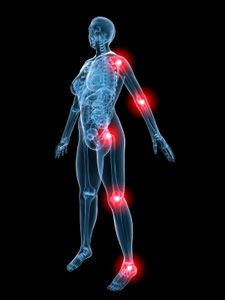 Osteoarthritis is characterised by the wear and progressive degeneration of the articular cartilage, leading to deformation of the affected bone.
Very common in adults, this disease often results from previous joint injuries caused by developmental disorders (congenital or appearing during early childhood or adolescence), by various inflammations, or by injuries (sports, traffic, or work accidents). Consequently, every joint trauma must be examined carefully in order to prevent, if possible, the later onset of osteoarthritis.
Initially, cartilage wear may be due to poor joint positioning (bow legs, for example), i.e. faulty mechanical use, or to the slow breakdown of particularly "thin" areas formed following an injury. However, joint lesions can also be caused by inflammations. Ageing is also an important factor, with wear accompanying changes in hormonal phenomena. Nevertheless, mechanical factors remain the main origin of osteoarthritis. Weight-bearing joints (hip, knee, foot) are the most affected. In addition to acquired lesions, there are also predispositions, such as significant excess weight.
At the onset of the disease, the surface of the cartilage covering the joint loses its smooth, shiny, white appearance and becomes yellowish, irregular, and cracked. Fissures form with progressive thinning of the cartilage. The wear then generalises, until the cartilage disappears completely and exposes the bone. The synovial fluid (or synovia), which is highly acidic, penetrates the bone thanks to its "acidity" and breaks it down in places, causing the appearance of geodes.
The bone surfaces in contact calcify due to calcium deposits covering the ends (sclerosis). The extreme joint pain that almost always occurs in patients with osteoarthritis is mainly due to bone friction. The modification and proliferation of cartilage ends and the ossification of the periosteum subjected to mechanical stress produce characteristic outgrowths and swellings, accompanied by often grotesque deformation of the joints. The joint capsule and the remaining cartilage tissue are also affected by this process of deformation and degeneration.
Some rejected cartilage residues can transform into free intra-articular foreign bodies ("joint mice") that cause a sensation of locking with loss of joint mobility. Total impotence through ossification (ankylosis) is rare in patients with osteoarthritis. When it occurs, it generally results from additional inflammatory processes within the joint.
Prevalence and impact in France, Switzerland, Canada, and the United States
Osteoarthritis is the most widespread joint disease in Western countries. It affects millions of people and constitutes a major public health issue.
In France, symptomatic osteoarthritis affects approximately 17% of the population, i.e. nearly 10 million people. Its prevalence increases with age: it affects more than 65% of those over 65. Knee osteoarthritis (gonarthrosis) is the most common, followed by hip (coxarthrosis) and hand osteoarthritis. The annual incidence of symptomatic hip and knee osteoarthritis in 45-75 year-olds is estimated at 1.9% in men and 4.7% in women. This pathology is the leading cause of motor disability in seniors and represents a considerable direct and indirect cost for the healthcare system, estimated at several billion euros per year.
In Canada, arthritis (of which osteoarthritis is the most common form) affects more than 6 million Canadians, i.e. approximately 20% of the population. It is the leading cause of disability in the country and represents an annual economic burden of $45.9 billion (healthcare costs and lost productivity). Prevalence is particularly high in the Maritime provinces and is expected to increase by 50% by 2045, reaching nearly 9 million Canadians. Osteoarthritis is also one of the main reasons for medical consultation and prescription of painkillers.
In Switzerland, the available data is more partial. Osteoarthritis is estimated to affect approximately 10 to 15% of the Swiss population. Although less documented than in other countries, the prevalence of osteoarthritis is increasing there, due to population ageing and the rise in risk factors (obesity, sedentary lifestyle). The direct and indirect costs of the disease are significant, but their precise quantification remains to be established.
In the United States, arthritis, of which osteoarthritis is the most common form, constitutes a major public health problem. Data from the Centers for Disease Control and Prevention (CDC) indicate that approximately 18.9% of American adults, i.e. nearly 53 million people, live with diagnosed arthritis. Prevalence increases sharply with age: it rises from 3.6% in 18-34 year-olds to over 53% in those aged 75 and over. Women are more affected than men (21.5% versus 16.1%). Osteoarthritis alone affects approximately 33 million Americans, i.e. nearly 13% of the adult population. This disease is the leading cause of disability in the United States, with more than 25 million adults whose daily activities are limited by arthritis.
In all four countries, demographic ageing and the progression of obesity suggest a continuous increase in the prevalence of osteoarthritis in the years to come, reinforcing the need to develop appropriate prevention and management strategies.
Sources
France: Société française de rhumatologie / MGEN (Mutuelle Générale de l'Éducation Nationale) / Inserm / Revue du Rhumatisme
Canada: Société de l'arthrite du Canada / Santé Ontario / NIH (National Institutes of Health)
Switzerland: Office fédéral de la santé publique (OFSP) / Sociétés suisses de rhumatologie
United States: Centers for Disease Control and Prevention (CDC) / National Health Interview Survey (NHIS) / Arthritis Foundation / United States Bone and Joint Initiative (USBJI)


